
Long-term strategic planning is the cornerstone of sustainable organizational success. It’s not simply about setting goals; it’s about creating a roadmap that navigates the complexities of a dynamic business environment, anticipating challenges, and capitalizing on opportunities. This guide delves into the core principles, processes, and practical applications of developing and implementing a robust long-term strategic plan, equipping you with the knowledge to chart a course towards lasting achievement.
We’ll explore the crucial distinctions between short-term and long-term planning, examine successful case studies, and provide a step-by-step framework for crafting your own strategic plan. We’ll also cover essential elements such as vision, mission, SMART goals, and KPI tracking, along with strategies for adapting to unforeseen circumstances and ensuring effective communication and stakeholder engagement throughout the process.
Implementation and Monitoring of the Plan
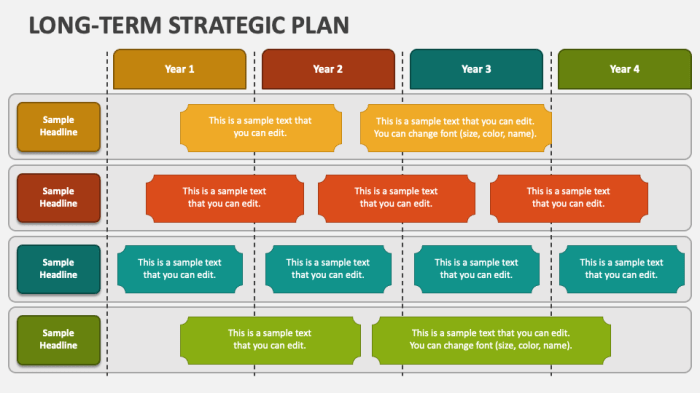
Successful implementation of a long-term strategic plan hinges on effective communication, robust monitoring systems, and a commitment to continuous improvement. This section details strategies for ensuring the plan’s successful execution and achieving the desired outcomes.Effective communication and stakeholder engagement are paramount to successful plan implementation. A well-defined communication plan ensures that all stakeholders are informed, engaged, and aligned with the strategic direction.
Communication and Stakeholder Engagement Strategies
A multi-faceted approach to communication is crucial. This involves regular updates through various channels, such as newsletters, town hall meetings, and individual progress reports, tailored to the specific needs and preferences of different stakeholder groups. Active listening and feedback mechanisms are essential to address concerns and foster a sense of ownership among stakeholders. For example, a company implementing a new sustainability initiative might hold regular workshops with employees to gather feedback and address their concerns about the changes.
This proactive approach fosters buy-in and minimizes resistance to the plan’s implementation. Furthermore, regular surveys and focus groups can provide valuable insights into stakeholder perceptions and help to refine communication strategies over time.
Tracking Progress with Key Performance Indicators (KPIs)
Tracking progress towards long-term goals requires a well-defined set of Key Performance Indicators (KPIs). KPIs are quantifiable metrics that measure progress towards specific objectives. The selection of KPIs should align directly with the strategic goals Artikeld in the plan. For example, if a goal is to increase market share by 15% within five years, relevant KPIs might include website traffic, sales conversions, and customer acquisition cost.
Regular monitoring of these KPIs allows for timely identification of areas requiring adjustments or corrective actions.
Effective Performance Measurement Systems
Effective performance measurement systems go beyond simply tracking KPIs. They involve establishing clear targets, setting regular review cycles, and incorporating mechanisms for accountability. A balanced scorecard approach, for instance, considers financial, customer, internal process, and learning & growth perspectives, providing a holistic view of performance. This comprehensive approach helps to identify potential bottlenecks and areas for improvement that might not be apparent when focusing solely on financial KPIs.
For example, a company might track customer satisfaction scores alongside revenue growth to understand the relationship between customer experience and financial performance.
Visual Representation of a Progress Dashboard
A visual dashboard provides a clear and concise overview of key metrics. Imagine a dashboard with several sections. One section could display a line graph showing revenue growth over time, compared to the projected targets. Another section might use bar charts to compare actual performance against targets for key customer satisfaction metrics. A third section could show a geographical map highlighting market share penetration in different regions.
Finally, a section could display key milestones achieved and upcoming deadlines, providing a comprehensive picture of progress towards long-term goals. This allows for quick identification of areas where performance is exceeding or lagging behind expectations, enabling timely intervention and course correction.
Adapting to Change and Uncertainty
Long-term strategic planning, while crucial for organizational success, operates in a dynamic environment characterized by constant change and inherent uncertainty. The ability to adapt and respond effectively to unforeseen circumstances is therefore paramount, transforming a rigid plan into a resilient and responsive framework. A successful long-term strategy anticipates change, incorporates flexibility, and establishes mechanisms for swift and informed adjustments.The importance of flexibility and adaptability cannot be overstated.
Rigid adherence to a pre-determined plan, ignoring evolving market conditions or technological advancements, can lead to stagnation and even failure. A flexible approach allows organizations to seize emerging opportunities and mitigate potential threats, ensuring continued relevance and competitiveness. This adaptability manifests in several key areas, including resource allocation, product development, and market positioning. For example, a company initially focused on a specific product line might need to pivot to incorporate new technologies or respond to shifting consumer preferences.
Strategies for Responding to Unforeseen Events and Market Disruptions
Effective responses to unforeseen events require proactive measures and a well-defined process. This involves establishing robust monitoring systems to track key indicators and identify emerging trends, both internal and external to the organization. Early warning systems, combined with a culture of open communication and rapid decision-making, enable timely responses to disruptions. Scenario planning, discussed in detail below, plays a vital role in preparing for a range of possible futures.
Furthermore, building strong relationships with stakeholders – suppliers, customers, and regulators – fosters resilience and facilitates collaboration during times of crisis. For instance, a company facing a supply chain disruption might leverage existing relationships to secure alternative sources of materials or components.
Contingency Planning for Potential Risks and Challenges
A comprehensive contingency plan Artikels specific actions to be taken in response to identified risks and challenges. This plan should detail potential disruptions, their likelihood, and their potential impact on the organization. For each identified risk, the plan should specify mitigation strategies, responsible parties, and pre-defined procedures. For example, a contingency plan might address potential cybersecurity breaches, outlining steps to contain the damage, restore systems, and communicate with affected stakeholders.
Regular reviews and updates to the contingency plan are crucial to ensure its ongoing relevance and effectiveness. The plan should not be a static document; it should be a living document, updated as the organization learns and the external environment evolves.
Scenario Planning Approaches for Long-Term Strategic Decision-Making
Scenario planning involves developing multiple plausible futures based on different combinations of key uncertainties. These scenarios are not predictions; rather, they are tools for exploring a range of possibilities and assessing the robustness of the strategic plan. Different approaches exist, including the “worst-case,” “best-case,” and “most likely” scenarios. A more sophisticated approach might involve developing four to six scenarios based on a combination of high and low probabilities for key uncertainties.
For example, a company in the renewable energy sector might develop scenarios based on different levels of government support, technological breakthroughs, and consumer adoption rates. By analyzing how the strategic plan performs under each scenario, the organization can identify areas of vulnerability and develop more robust strategies. This allows for more informed decision-making, reducing the impact of unforeseen events and enhancing the long-term viability of the strategic plan.
Successfully navigating the complexities of long-term strategic planning requires a blend of foresight, adaptability, and consistent execution. By understanding the core principles, mastering the process, and embracing a culture of continuous improvement, organizations can transform their strategic plans from mere documents into powerful instruments driving sustainable growth and lasting competitive advantage. This guide provides a solid foundation for embarking on this crucial journey, empowering you to build a future defined by your vision and strategic direction.
FAQ Section
What is the ideal timeframe for a long-term strategic plan?
The ideal timeframe varies depending on the industry, organization size, and specific goals. Common durations range from 3 to 10 years, with shorter-term plans (1-3 years) often used to support the overall long-term vision.
How often should a long-term strategic plan be reviewed and updated?
Regular review and updates are essential. Annual reviews are recommended to assess progress, address emerging challenges, and adapt to changing market conditions. More frequent updates might be necessary in highly dynamic environments.
What happens if unforeseen circumstances derail the strategic plan?
A well-developed plan includes contingency planning to address unforeseen events. Regular monitoring, flexibility, and a willingness to adapt are crucial for navigating unexpected challenges and staying on track towards long-term objectives.
How can I ensure buy-in from all stakeholders for the strategic plan?
Effective communication, transparency, and stakeholder engagement are key. Involve stakeholders in the planning process, actively solicit their input, and clearly communicate the plan’s rationale, goals, and benefits to foster buy-in and support.


